Category Archives: Taiwan

Tainan, Taiwan

If you want to see temples, this is the place, it has more Taoist and Buddhist temples than any city in Taiwan.

Tainan is the fourth largest city on the island. It is located in the southwestern corner and used to be the capital under the Qing Dynasty until 1887.

I did the historic walking tour from the Lonely Planet and stopped at least 12 or so temples before we called it a day and went to get dinner. The city itself takes up a very wide land mass because very few buildings are built over six stories. Taxi drivers here do not know any English so I had to put my little Chinese into full use. Only high school and university students will know English. The older generation, just like in most Taiwanese cities will speak Japanese due to the imperial rule.

Getting to Tainan is not as convenient as other cities along the High Speed Rail corridor. The station is about a 45 minute bus ride to get to downtown Tainan.

Tainan has several famous items for those interested in local cuisine. Those worth a try include: Oysters and Noodles (蚵仔麵線 kèzǎi miànxiàn), Dan Dan Noodle (擔仔麵 dānzǎi miàn), and the Oyster Omelette (蚵仔煎 kèzǎijiān).

Historic Caoling Trail

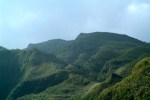
Caoling Historic Trail (草嶺古道) was once an important trail that linked Yilan and Danshui. Today, it is a great place to take a weekend afternoon and enjoy a long hike while basking in some of the great views on Taiwan’s northeast coast.

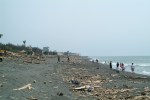
The path to the trail has a lot of small rice farms and scenery to enjoy. The trail itself is primitive in some parts and rather easy to hike in others. The day that we hiked it was rather muddy in certain areas as it had just rained. After the hike, we took the train a few stops down to Fulong Beach to eat and watch a couple surfers brave the cold water. In total the hike lasted about five hours.

Qixing Mountain

Qixing Mountain (七星山) is translated into English as “Seven Star Mountain.” It is located just outside Taipei, in Yangmingshan National Park. The mountain is part of the Datun Volcano Group and is listed at 3,675 ft.

At the top of this extinct volcano sat one large crater which has since been split into seven smaller peaks due to heavy erosion. On our hike, several paved roads and bridges were completely washed out from recent typhoon Megi, 10/24/10. The mountain is rather steep, with little undergrowth to stop quick landslides that occur with heavy rains.

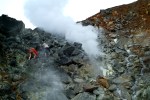
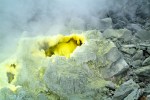
The main draw to this area is the gas fumaroles that emit large quantities of sulfur. The smell is just as intense as the flourescent yellow colors. Natural hot springs form in areas that have adequate rock to trap the water into small pools. This was a great place to enjoy a half-day hike, eat lunch by the hot springs and also get in some photos.

Backpacking-Kaohsiung

Chinese Professional Baseball League

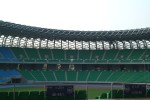
The CPBL or 中華職業棒球大聯盟 is made up of the top baseball players in Taiwan. Currently the league consists of four teams that play on a rotating basis in stadiums all over the island. Although some teams are more popular than others in certain cities, teams do not play out of a home stadium as in the U.S.

In 2008 the league was hit with a large game fixing scandal. Two teams folded and several players were banned for life.  Since the founding of the league twenty years ago there have been several high profile betting scandals involving players. These incidents have taken a toll on attendance and league popularity.

The quality of play is similar to about “AA” minor league ball in the U.S. Each team is allowed four import players. These players are often given Chinese names to help draw more local interest. Import players usually come from Japan, South Korea, or the U.S.

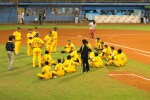
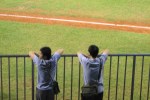
One of the best things about Taiwan baseball is the atmosphere in the stadium. Starting at home plate, each fan base sits on the side of their teams dugout. While your team is batting it is constant mayhem in the stands. Fans bring drums, trumpets, noise makers etc. The first game I attended looked like the opposing team had a literal percussion section just going crazy. Furthermore, each team has a ring leader who has a megaphone leading the cheers.

Another cool aspect is the affordability. Tickets start at about $3 U.S. and you can also bring in any food and drinks you want. In the outfield bleachers it is even possible to bring your own grill into the stadium.

Current teams in the league are the Brothers Elephants, La New Bears, Sinon Bulls, and the Uni-President 7-Eleven Lions.

Kaohsiung, Taiwan

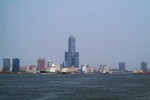
高雄 is the second most populated city in Taiwan. Located in the southeastern corner of the island, this city of nearly 1.5 million inhabitants serves as Taiwan’s major trading port.  The port of Kaohsiung is the 6th biggest seaport in the world.

A new city-wide MRT opened in March 2008, just in time for the World Games which Kaohsiung hosted a year later. In the city center the MRT trains run underground and then gradually progress above ground as they move toward outlying areas.

The cities heavy reliance on industry and sea trade has not just had positive effects on the region. This focus on industrialization has led to high contents of air pollution, which the city has made strides in recent years to curb. Today Kaohsiung has made active pledges to use green space while expanding the city proper.

Over a dozen water taxis serve locals and tourists alike as they connect to different parts of the island harbor. The top deck is for pedestrians on foot to congregate, while the lower level is filled with scooters. When the boat pulls in to its destination a mad dash of bikes race out when the gate is let down.

Unlike the capital city of Taipei, Kaohsiung has a wide streets centered on a western grid system. This urban planning allows those with cars the luxury of less traffic to navigate in. For the backpacker, this city is easy to get around.

Compared to many Asian cities Kaohsiung sees less tourists than other metro areas of similar size because of its location. Now that the High Speed Rail connects Taipei with Kaohsiung, (3 hr ride) this is slowly changing.

Be be prepared for a joyful welcome to westerners from locals, espcially from smaller children. During my time walking through the tight city streets and markets, several childern would follow close by, say hello in english, and watch with a unique inquiry, every move we made.

High Speed Rail

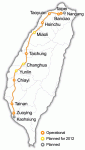
Last week I got to experience my first trip on the Taiwan High Speed Rail. It is designed similar to the futuristic bullet train system in Japan. This new transport offers a north/south route along the west coast of Taiwan from Taipei to Kaohsiung. Everything about the project which opened in January of 2007 is first class. The train stations are post modern structures, and the in train seating offers plenty of leg room.

While reaching speeds of 185mph, the ride is very smooth. It feels like you are floating on air. That is because you are floating on air. I am not much of a scientist but the premise is like this. The train is guided by overhead cables and then floats over the track when reaching high speeds, by using magnetic charges to stay online but not actually make contact with the rail.

台北101

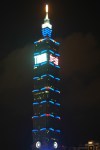
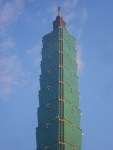
Taipei 101 is currently the tallest building in the world. That distinction will only be held until December 2009, when Burj Dubai in Dubai, UAE, will take over the crown.  This is an unbelievable structure. The elevator to the top takes just a few seconds. When at the top, the observation deck is quite windy but offers some interesting views, as this structure just towers over the city. I was only up on the top during the day but I think night shots would be better, because the smog does not allow much depth to images taken in natural lighting.

The building was designed to withstand 135mph wind and almost any earthquake possible. To do this, the building can sway to prevent structural damage. It is truely an engineering marvel to put up a skyscraper like this in an environment like Taiwan which recieves typhoons and earthquakes on regular occasion.

National Theatre and Concert Hall

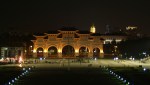
National Concert HallNational TheatreLiberty SquareRehersalCK-S MemorialSound Check

國家戲劇院 國家音樂廳 (National Theater and Concert Hall) are two of the nicest facilities in Asia. The National Symphony Orchestra, National Chorus, and also the National Chinese Orchestra hold administrative duties for the facilities.

Orchestras from around the globe have performed in front of large Taiwanese audiences here. The San Francisco Symphony Orchestra and Shanghai Symphony Orchestra, are just two of many famous orchestras to have held concerts in the picturesque venue. Also, international figures such as Mikhail Gorbachev and Margret Thatcher have attended as guests.

Here are some photos that I took of the two epic structures. Originally, I took some day shots but went back the next weekend to change settings and try again at night. As cliche’ as it sounds, these images do not do justice to the size and beauty of these national monuments.

Hsinchu City


In 1626, after Spain occupied northern Taiwan, Spanish missionaries came southwest to where the native Taoka Taiwanese lived. This area eventually become known as Hsinchu, (sin-chu) or (shin-chu) I have heard it pronounced either way. Hsinchu has a population of around 200,000 but it is hard to tell where the actual boundaries are. If you take a bus from Taipei (about an hour) or Taoyuan International Airport (30 minutes) you will see large apartment buildings and industry the whole way. There is no break at all, it is similar to driving through suburbs in America but there are more high rise apartments.

Taiwan is currently around the second or third most populated country in the world per square mile, with approximately 23 million residents. Lying only 90 miles off the coast of China, this small island can be traveled from one end to the other by train in an hour and a half. The high speed bullet train the goes north and south uses similar technology to those in Japan, and some areas of Europe, reaching speeds of well over 100 mph.